- Ramesh Dwivedee, Delhi

Developing the Future of India by Character Building of its Young Citizens
- Sonali Sengupta
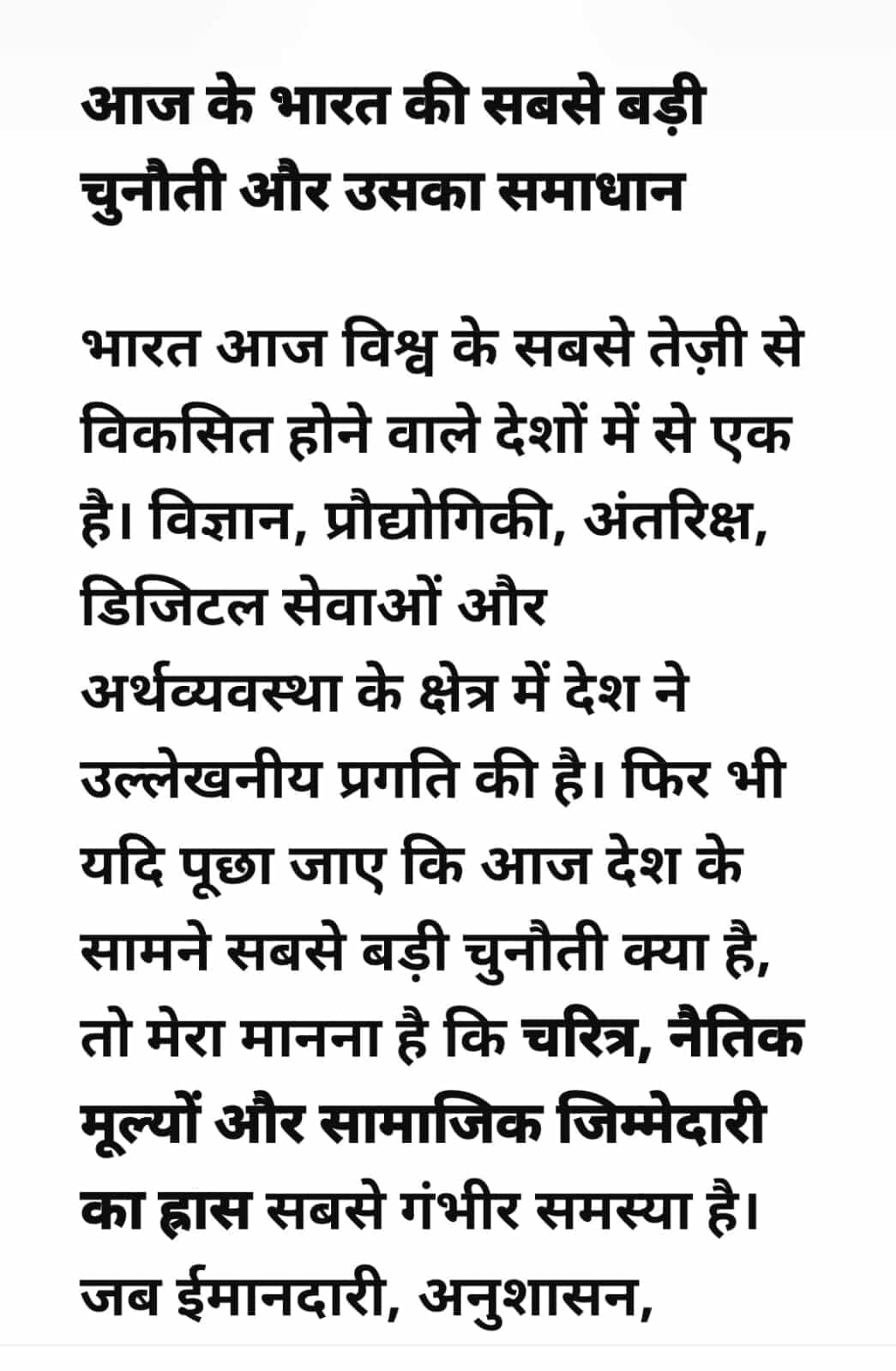
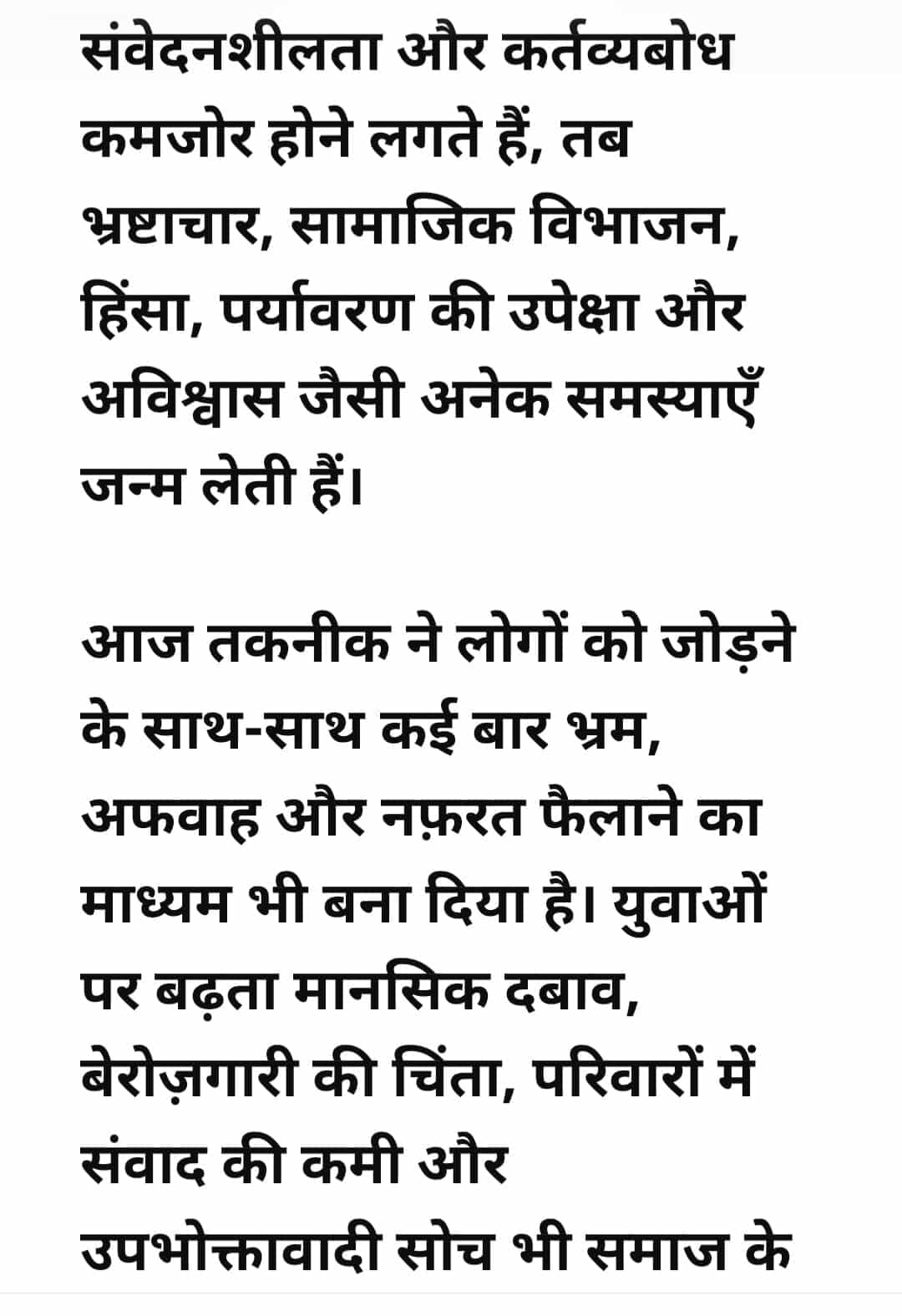
A big challenge facing the country today is “corruption” and “laid-back disinterested attitude towards work by many Indians.” “Corruption” arises when you think albeit in a wrong way about how a system functions. A corrupt person assumes that by bribing people, you can get your work done faster. A laid-back (tamasic) disinterested attitude towards work assumed by many workers is based on the belief, that I will work for my salary only, and get it no matter whether I show up to work every day and do my work efficiently or not. Both these types of attitudes require “character building” as a solution.
Two components of character building are “integrity” and “humility”. Integrity can be developed when the system rewards the honest person for doing the work efficiently. Basically, the system, should not reward people who are working for salaries and titles only, but are working with purpose and intentionality. Humility can be developed if the person sheds “ï know it all” attitude. Even the illumined mystic Sri Ramakrishna who was the guru of Vivekananda said, “As long as I live so long do I learn. That man or the society which has nothing to learn is already in the jaws of death”. A service-oriented attitude or seva bhav with purpose is what will create great leaders of India, as these people are not working for their own selfish means, but for a greater noble cause i.e., nation building via service to the nation. Both integrity and humility can be integrated in school curricula from middle school to high school level via character building workshops, which inculcate values of integrity and humility and then mould the students’ character by involving them in team projects that develop their honesty and humility quotient. Humility can also be inculcated by involving students in service oriented projects like serving the less privileged, by teaching them and providing the less privileged with material resources.

The Freedom of Choice: The Value of Values
- Subha Kannan, Bangalore
Freedom gives us something incredibly powerful: choice.
The choice to think, to question, to speak, to create, to disagree and to decide the course of our own lives. It is one of the greatest gifts of a free society.
But every choice also asks something of us: What will guide that choice?
This is where values matter.
We often speak about values as if they are a list of qualities we should possess: honesty, respect, empathy, courage, responsibility. But values become meaningful only when they influence what we actually do.
- Choosing to be honest when dishonesty is easier.
- Respecting someone even when we disagree with them.
- Thinking before reacting to something online.
- Taking responsibility for a public space instead of assuming it is someone else’s problem.
- Standing up for what is right even when it is inconvenient.
These are ordinary choices. Yet, when millions of citizens make them every day, they shape the character of a nation.
This is perhaps one of the challenges before India today. As opportunities expand and young people gain greater freedom, access and influence, how do we ensure that our freedom is accompanied by the values needed to use it well?
Swami Vivekananda said, “Education is the manifestation of the perfection already in man.”
Perhaps education must therefore go beyond preparing young people to succeed in life. It must help them understand themselves, make thoughtful choices and recognise that their choices have consequences beyond themselves.
The India we leave for the next generation will be shaped not only by the economy we build or the technology we create, but also by the everyday culture we leave behind .
What we choose to value today will become the world they inherit tomorrow.
That is why freedom of choice matters. And that is why the value of values matters even more.
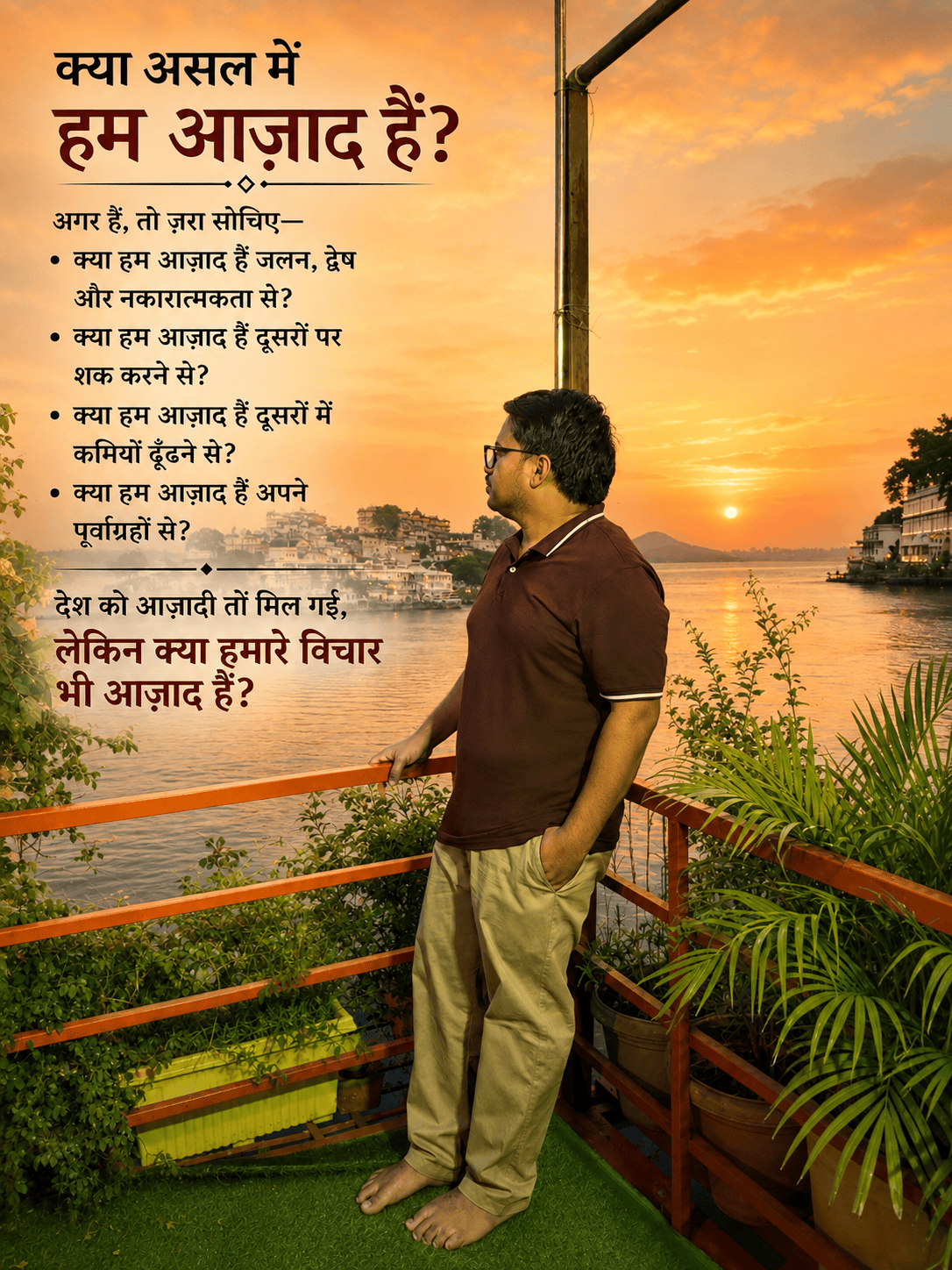
Saurav Bisht from Rajasthan questions thoughtfully on what real freedom is. Does external freedom necessarily mean that we are internally free from our various negativities and biases?