Parenting - A Spiritual Journey / पालन-पोषण — एक आध्यात्मिक यात्रा

29.06.26 04:33 PM

The following quote appears as a message from Revered Swami Shantatmananda in the e-journal to VIVA's ARISE workshop for parents - "Parenting is an extraordinary spiritual journey that demands complete attention and total dedication. I wish all parents great fulfillment in bringing out the best human potential in their children. Wise parents can ensure that their offspring are awakened citizens and evolved human beings."  Parenting is both, challenging and joyful in equal parts. However, if we see it as a spiritual journey we are sure to give it our best and evolve in the process. 
My Journey of Parenting  
- Chhandita Sensharma, Gurugram

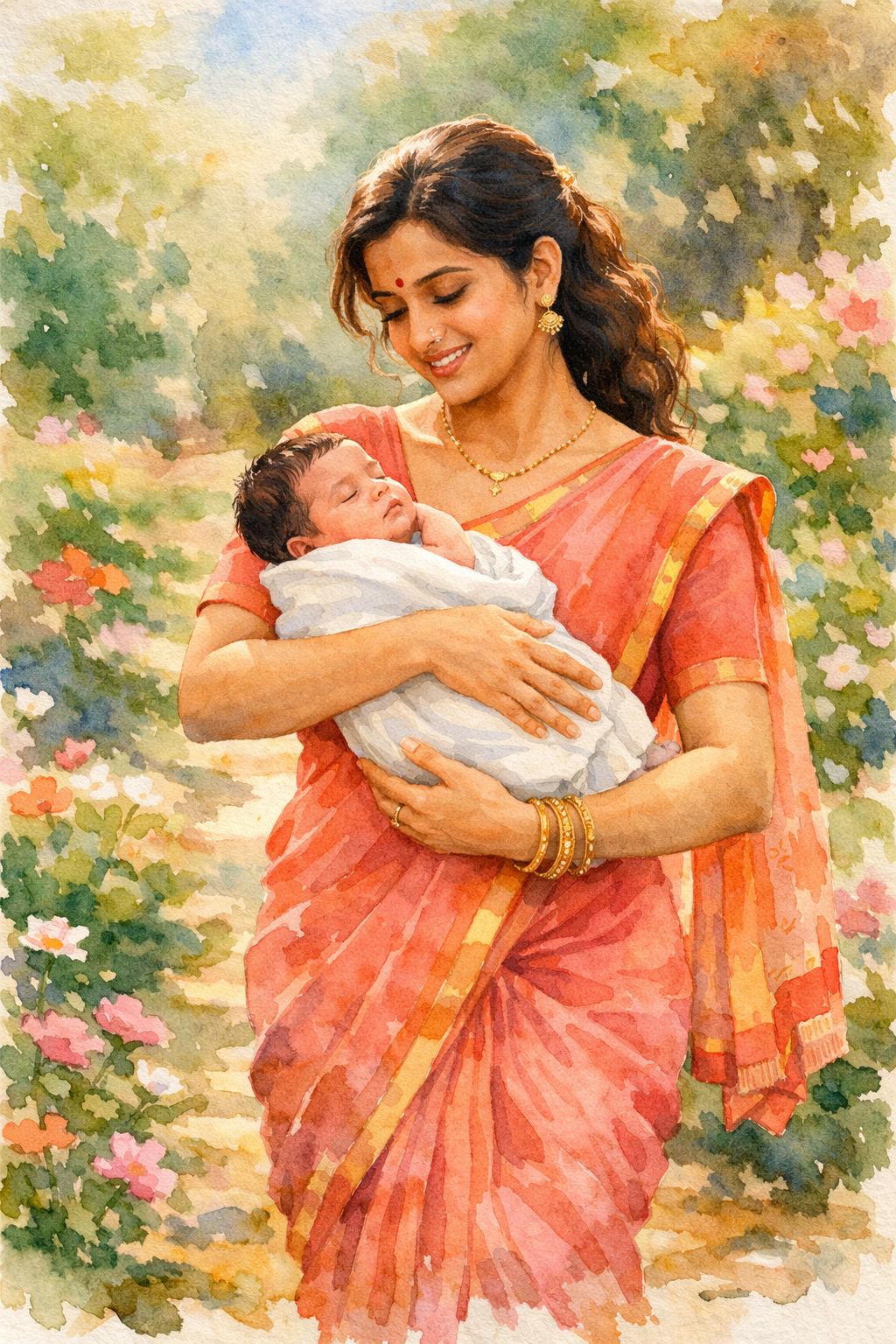
Holding my firstborn for the first time was a moment of pure joy mixed with a little self-doubt. A feeling of fear of whether I would be able to do everything right came up. A journey into the unknown had begun. I soon realised that there were abundant guidance and support available for a child’s physical well-being — nutrition, health, growth, and development. But I found myself wondering: what about the emotional world of the child? How do we nurture a child’s feelings, confidence, inner strength, and sense of self?


Each child is unique, and so is the parenting journey. Even with siblings raised in the same home, each child brings a different temperament, personality, and way of experiencing the world. Parenting is not about following a fixed set of rules, it is about understanding, observing, and responding to the individual child with love, patience, and awareness.


My circle gradually grew with the mothers of my child’s friends. Their experiences, perspectives, and approaches often gave me new insights and showed me possible directions at different moments. I realised that parenting is not a journey we walk alone but we learn from each other by sharing our challenges.


I grew up hearing the phrase, ‘Spare the rod and spoil the child,’ and at the same time, my mother’s gentle reminder stayed with me: ‘A mother is always kind and gentle.’ As a young mother, these two thoughts often left me confused — should parenting be about discipline and correction, or about patience and kindness? With time and experience, I understood that my mother was right. True guidance does not come from fear, it comes from love, understanding, and a gentle approach that helps a child grow.


With each stage of my child’s journey, I discovered areas where I could have responded differently. There were times when I wished I had listened more deeply, avoided unnecessary confrontations, and focused less on my expectations and more on understanding what my child truly needed. My close friends reminded me that we were all doing our best as young, inexperienced mothers, especially with our firstborns. We were learning as we went along, balancing multiple roles and responsibilities, while keeping parenting at the centre of our lives. And yet, we as human beings faltered, learned, and progressed. Perhaps parenting is also a journey of forgiving ourselves and recognising the love that was present through it all.


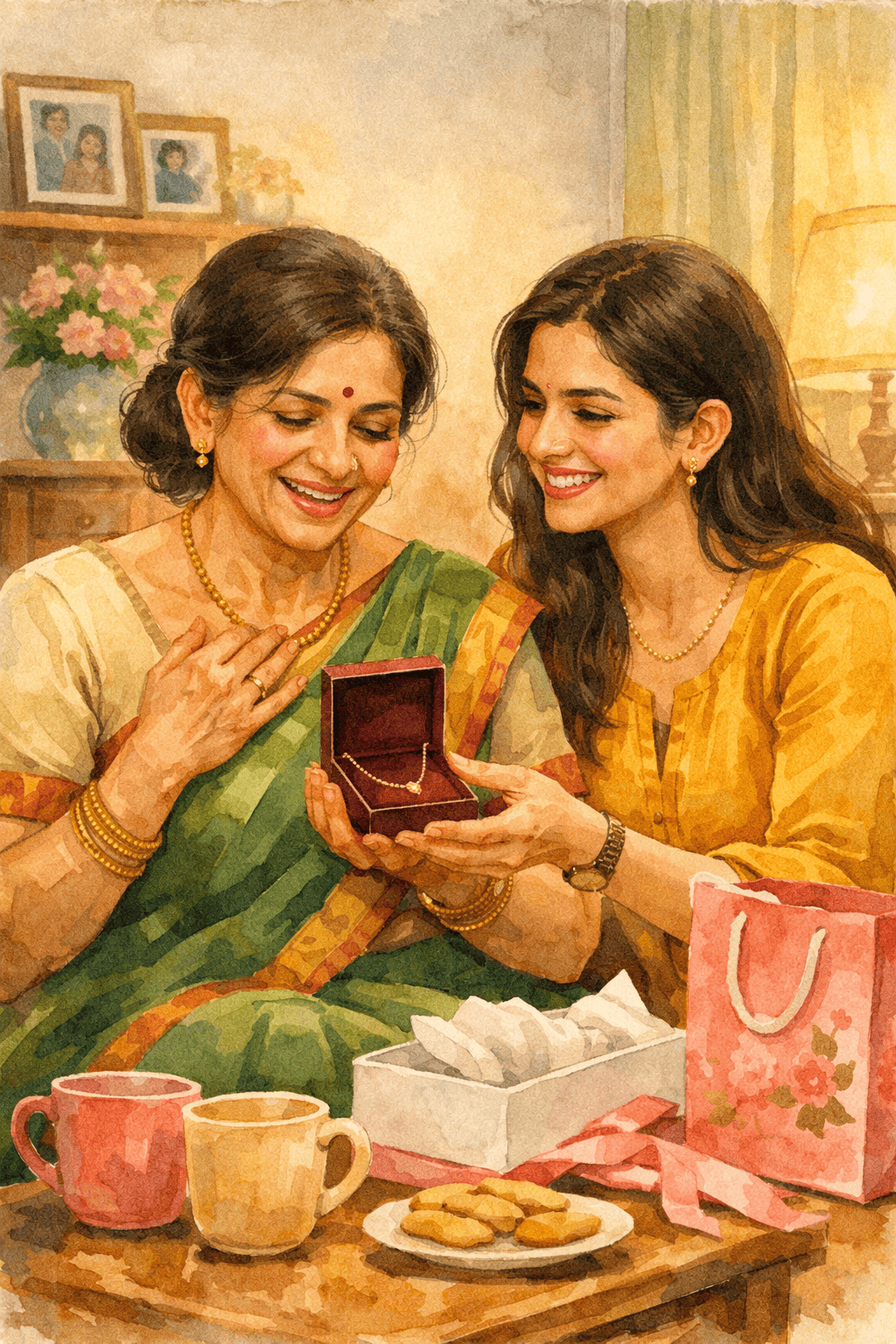
The journey becomes deeply fulfilling when, one day, we suddenly realise that our child has grown into a friend. The relationship slowly transforms as they begin to share their moments of joy, fears, doubts, and anxieties with us. It is a beautiful reminder that parenting is not only about raising a child, but also about building a bond of trust and companionship.


The familiar conditioning of ‘study hard so that you can stand on your own feet’- a phrase we often repeat as parents gradually takes on a deeper meaning. It is no longer only about achievement, independence or success, it becomes about having the inner strength to face challenges, to share, to care, and to walk through life with empathy and resilience. Perhaps the greatest joy of parenting is witnessing the child transform and evolve into a good human being. For me, parenting is a journey of mutual evolution and the parent discovers within themselves unknown reserves of love, strength, patience and wisdom.

दोबारा पढ़ें?

​- Vandana Kochhar, Gurugram

मेरी मां, विजय जैन, लगभग रोज ही अपनी किट्टी पार्टी जाती थी
भागती दौड़ती उन्हें लेट होना बिल्कुल पसंद नहीं था
लेट होने पर पेनल्टी भी थी ना 
उनका किट्टी का मोह हमें कभी समझ नहीं आया
आंधी या तूफ़ान, जाना तो है
अपनी सहेलियों से मिलना जो था
सब मिलकर स्वादिष्ट खाना खाती, गप्पे लड़ाती,
पापा की, दादी की चुगली, हमारे नंबरों का कम्पेरिजन भी होता कभी कभी
परंतु सब बुरा नहीं था
किट्टी से जो पैसे आते उससे वो घर संवारती, हमारी पसंद की चीजें लाती, जमा भी कर लेती
नई नई बातें सीखती, हमारे लिए फैशन का पता रखती,
कभी कभी तो चैरिटी भी कर लेती 
जाने से पहले उदास होती तो बाद तक ठीक हो जाती
दादी की बातों का बुरा ना मानो 
हंसकर कहती - उनकी किट्टी नहीं है ना

मेरी मां की किट्टी का नाम था
गवर्नमेंट गर्ल्स सीनियर सेकेंडरी स्कूल 
वो स्कूल में मैथ्स की अध्यापिका थीं 
दोबारा पढ़ें
हां ये ही थी उनकी किट्टी
हर वो लेडीज ग्रुप जिसमें वो खुदको 
सेफ़ महसूस करें 
घर परिवार से निकलकर विजय बन पाएं 
वो ही है उनकी किट्टी

(A poem dedicated to all working and non-working mothers.)

A Celebration Divine 

​- Karthik Shankar, Gurugram

Bel leaves scented with sandalwood paste,
Await being offered to the Deity Supreme,
In the stillness of time,
With bated breath we all wait.

A saintly figure, with Life infinite,
Initiates us to the eternal Truth,
Like children being held by our hands,
We are introduced to the sublime.

We bow and take blessings at the lotus feet,
With benediction peaceful and kind,
Perhaps life has begun anew
With this celebration Divine.

(A poem dedicated to the Diksha ceremony where the poet feels like a child being shown the way to the parental divine)

Reflections on Parenting from The Vedanta Kesari

The Vedanta Kesari, meaning the Lion of Vedanta, is a spiritual and cultural English monthly of the Ramakrishna Order published from Sri Ramakrishna Math, Chennai, since 1914. For over a century, it has featured insightful articles on spirituality, culture, education and human development.In this section, we present excerpts from three articles that explore parenting through a spiritual and cultural lens. Readers who wish to delve deeper into these ideas can follow the links provided to read the complete articles.
The popular belief is that the father is reproduced in the son. A similarity between parent and offspring in respect of physical characteristics and mental capacities and in regard to behaviour-peculiarities and pronounced singularities quite fits in with the plan of nature, according to which like goes with like. There is nothing surprising in Rama being Dasarathi or in Indrajit being Ravani. If the son is the legal heir to the father’s material wealth, he is also the mental and moral heir to the father’s deformities and excellences in the inner regions of being. Debts incurred by the father bind the son in a more vital way in the psychological sphere than in respect of mere monetary dealings, and dues payable to the father get satisfactorily cleared if paid to the son. The biological nexus between the pita and the putra with its deeper repercussions in subtler realms than the physical, is, except in regard to a few very rare exceptions, a fact of nature. Not only does a noble father beget a noble son, an idiot often begets an idiot. 


To read the complete article, please visit: https://vk.rkmm.org/m/vedanta-kesari-1972/a/03-as-is-the-parent-so-is-the-offspring-apr-1972

Home—the First School
All books, seminars and lectures put together cannot equal the role parents play in moulding a child’s personality. Parents’ role in developing the personality of young minds under their care is irreplaceable and far-reaching in its effect. A child acquires, often unknown to itself, the personality traits of his/ her parents and shapes its personality. What one gets or absorbs from one’s elders, parents and domestic settings largely makes or mars the personality of a person.

Truly has it been said, ‘Home is the First School’. It is at home that the child gets his first and lasting impressions about living, behaving and thinking. It is at home that his process of education begins. Education at the school begins much later. And even after one gets into school, one’s home continues to cast a strong influence on one’s learning process. Parents are a child’s first teachers. No wonder, the Taittiriya Upanishad exhorts, 
Let your mother be a God. 
Let your father be God.

The Eternal Relationship 
The advent of Sri Ramakrishna and Holy Mother Sri Sarada Devi marks the awakening of the spiritual consciousness of the whole world in the modern age. In the Ramakrishna tradition, they are devotionally addressed as Sri Thakur and Sri Ma, or simply Thakur and Ma, the Lord and the Mother. Within a few years of their Divine Play (Leela), the saga of their life and message for humankind has spread throughout the globe and has been accepted by spiritual aspirants, devotees, scholars, and historians worldwide as the nectar of harmony and peace. Among these, there are many souls who have felt a special touch of Thakur and Ma in their lives. They have become blessed by realising that Thakur and Ma are none other than the eternal parents of humankind, who appear on earth in every new age to guide their children on the path of righteousness leading to Supreme Truth and Eternal Freedom. 

RKM GURUGRAM